What Is the Yield Curve and Why Does It Predict Recessions?
What is the yield curve?
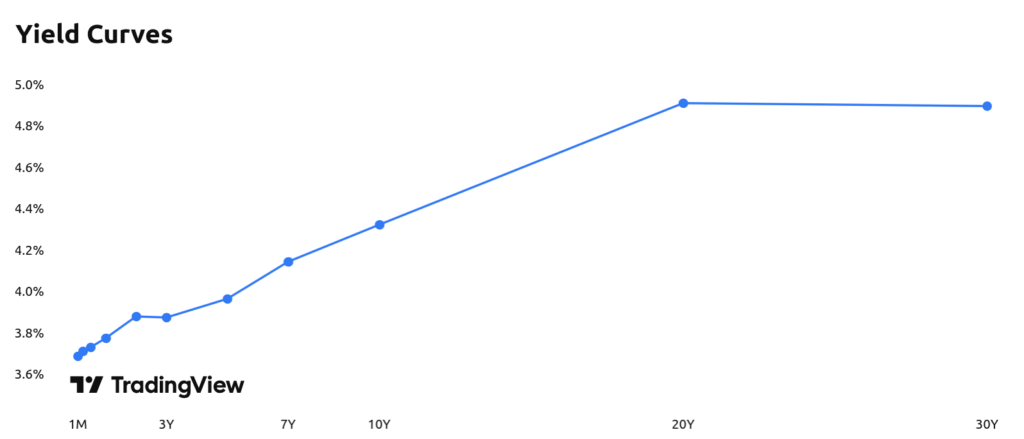
The yield curve shows the relationship between interest rates (yields) and time to maturity for government bonds—typically U.S. Treasuries.
Under normal conditions:
- Long-term bonds (10-year) have higher yields
- Short-term bonds (2-year) have lower yields
This reflects:
- inflation expectations
- economic growth expectations
- risk premium over time
What is a yield curve inversion?
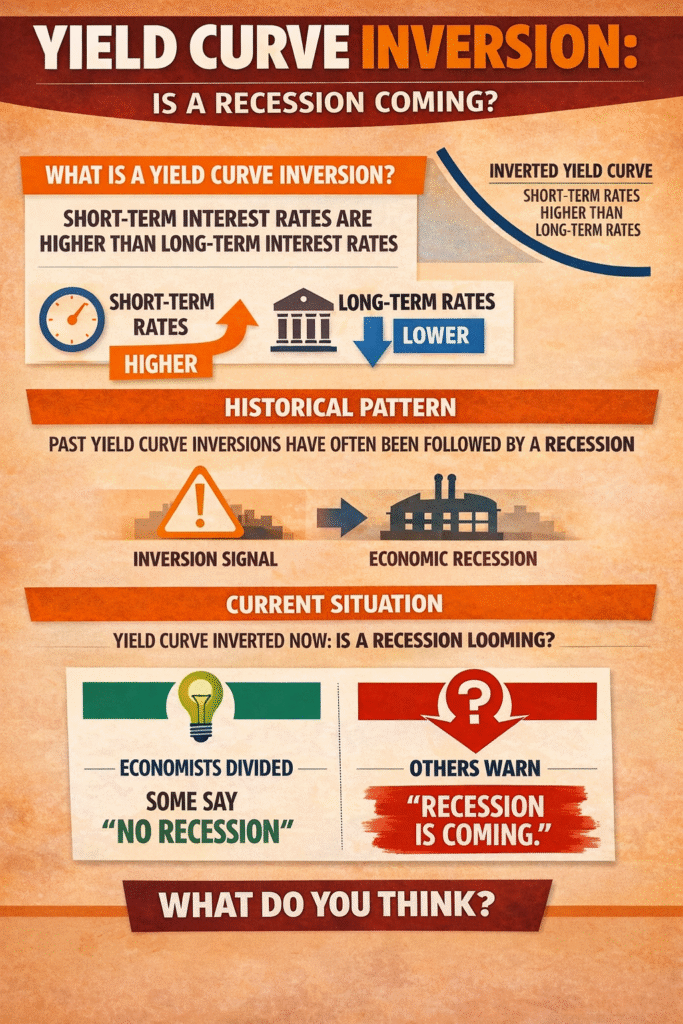
A yield curve inversion occurs when:
- short-term rates > long-term rates
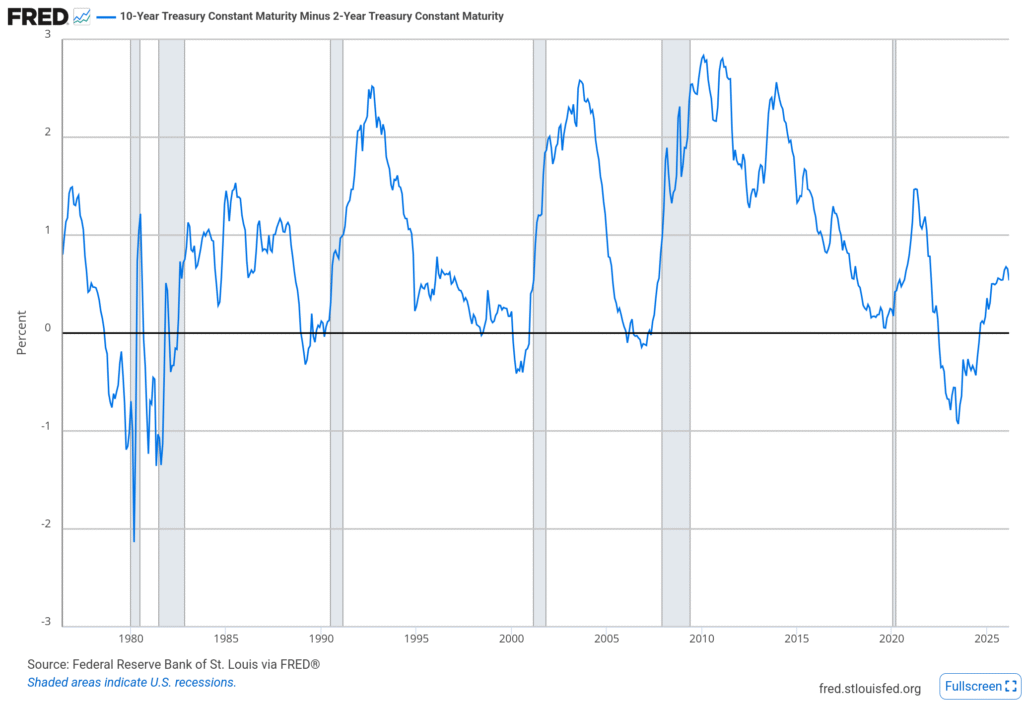
In practice, the most commonly watched measure is:
- 2-year vs 10-year Treasury spread
👉 When this spread turns negative, the curve is inverted. Check the plot below!
Why does the yield curve invert?
There are two forces at play:
1. Central banks raise short-term rates
To fight inflation, central banks increase policy rates.
→ Short-term yields rise quickly
2. Markets expect slower growth ahead
Investors anticipate:
- weaker growth
- lower future inflation
- eventual rate cuts
→ Long-term yields stop rising or fall
👉 The result:
Short-term rates > long-term rates
→ inversion
Why does it predict recessions?
An inverted yield curve signals that:
- monetary policy is tight
- financial conditions are restrictive
- markets expect a slowdown
This leads to:
- reduced lending profitability for banks
- tighter credit conditions
- slower investment and consumption
👉 Which eventually leads to a recession.
Historical examples of yield curve inversions
Here are the most important recent cycles:
🔹 1989 Inversion → 1990 Recession
- Inversion: late 1988 – early 1989
- Recession: July 1990 – March 1991
👉 Lag: ~12–18 months
🔹 2000 Inversion → Dot-com Recession
- Inversion: 2000
- Recession: March 2001 – November 2001
👉 Trigger: tech bubble burst
🔹 2006–2007 Inversion → Global Financial Crisis
- Inversion: mid-2006 → mid-2007
- Recession: December 2007 – June 2009
👉 One of the clearest signals in modern history
🔹 2019 Inversion → Pandemic Recession
- Inversion: August 2019
- Recession: February 2020 – April 2020
👉 Special case: shock-driven recession (COVID), but signal still valid
🔹 2022–2024 Inversion → ? (ongoing cycle)
- Inversion began: mid-2022
- Deepest inversion: 2023–2024
👉 Still being debated:
- delayed recession?
- or structural changes?
What about “uninversion”?
This is where it gets really interesting—and often misunderstood.
What is uninversion?
The yield curve returns to normal shape:
- long-term rates > short-term rates again
But this usually happens because:
- central banks start cutting rates
- short-term yields fall quickly
Why uninversion matters more than inversion
Historically:
👉 Recessions often begin after the curve steepens again, not at the moment of inversion.
Examples:
- 2000: curve steepened → recession followed
- 2007: steepening preceded the crisis
- 2020: steepening before COVID recession
“The inversion is the warning. The steepening is often the trigger.”
Limitations of the yield curve
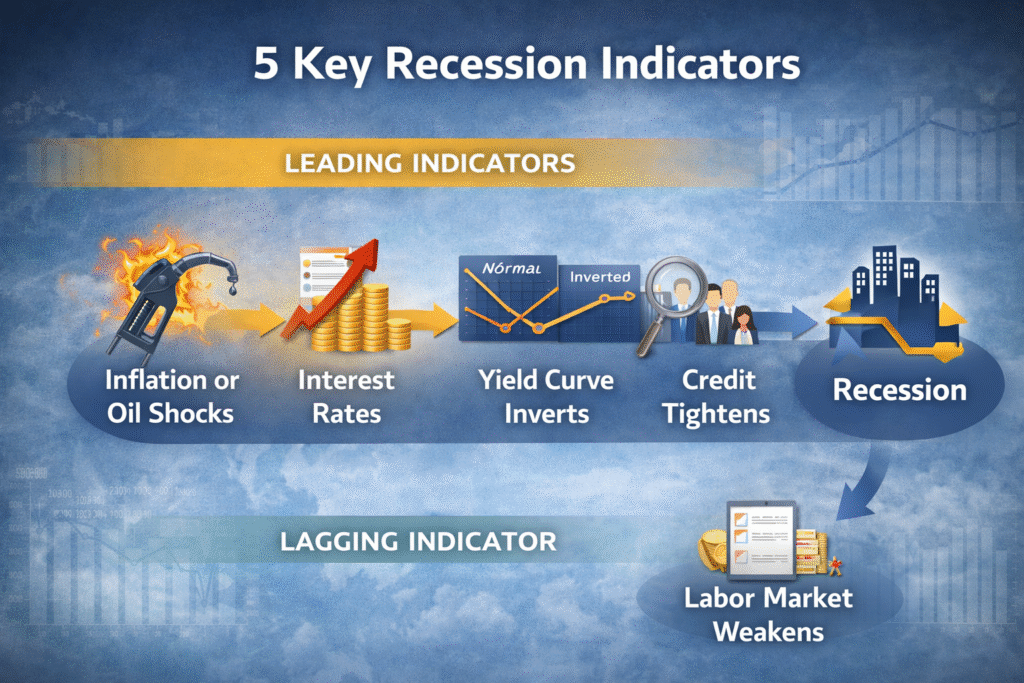
No indicator is perfect. Check here a related article on recession indicators.
1. Timing is uncertain
- Lag can vary from 6 to 24 months
2. False signals (rare but possible)
- Some inversions did not lead to immediate recessions
3. Structural changes
- QE, global demand for bonds, and central bank policies may distort signals
How to use it in practice
The yield curve works best when combined with:
- interest rate trends
- credit conditions
- labor market data
Subscribe below to be notified each time we publish new material!