Market Recap: 9-13 March 2026
Financial Markets
US Stock Market
The US stock market indices dipped for the second consecutive week, pulled down by the middle east conflict – a perfect catalyst for a correction. For the week, the S&P500 and the NASDAQ 100 lost 1.6% and 1.1%, respectively. The small cap index (Russel 2000) fell 1.9%. Trading volumes have been slightly higher than average – but not panic-like. The biggest gainers have been oil and fertilizer producers.
COMMODITIES
Gold fell 3% and is now around the 5k$/oz level, which should act as a support level. After peaking around 120$/oz in January 2026, this week silver lost 4.6% and currently hovers around 80$/oz. The metals are now consolidating after months of a bull run.
WTI crude oil had an historically-high intra-week volatility exceeding 35% – moving between 119$ and 76$ per barrel, and finally closing the week at ~99$/bbl. Just three weeks ago oil was around 67$/bbl!!! Natural gas didn’t suffer from such high volatility.
Bitcoin rose 8.3% for the week and is now around 71k$, which should act as a support.
US DOLLAR, MONEY SUPPLY
The relative strength of the US dollar (DXY) rose by 1.7% to ~100 – a clear flight to safety! The EUR/USD is around 1.142$, the GBP/USD is at 1.322$, and the USD/JPY is at 159.73 JPY.
US M2 money supply in January was at 22.4T$, still on a growth trend, showing a continuous increase in the money supply since December 2023. Banks didn’t stop lending so far – if the money supply was going down, it would be a warning sign for the economy and equities.
The national financial conditions index (NFCI) released on 2nd of March 2026 shows the tightening of financial conditions for the sixth consecutive week, and will likely continue on a tightening trend as long as the international geopolitical and energy situation is not stabilized. Note that this indicator is delayed by two weeks. Positive numbers in the NFCI mean tighter financial conditions, while negative numbers indicate looser financial conditions.
BONDS AND OPTIONS
US bond yields now sit at 3.729% for the 2-year and 4.283% for the 10-year. The yield curve has uninverted since a year ago, an expression of expectations for low growth, low inflation, and short-term interest rate cuts. Long-term growth and inflation expectations are at ~4.908% (30-year US bonds), slightly higher than a few weeks ago.
The VIX jumped momentarily to ~35 but closed the week at 27. There is clearly more fear in the markets and selling pressure is increasing. If options sellers believe this is just the beginning of the downturn, then this is not the moment to sell puts, so hold your horses – the time will come! However, if you see any opportunities plus a juicy option premium, go ahead!
Comment Section
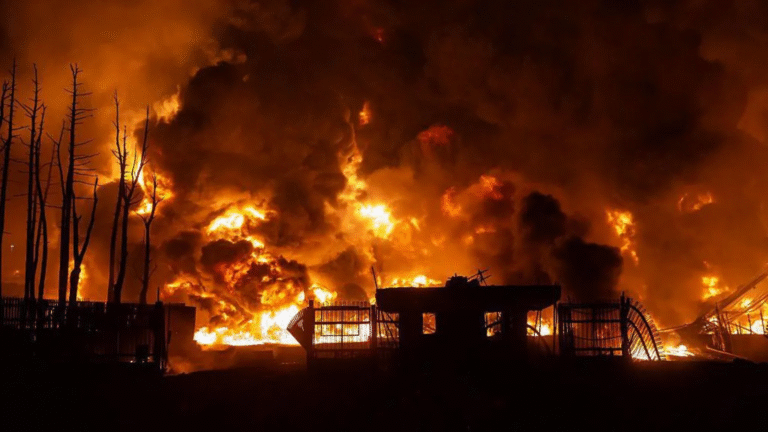
The conflict across the Middle East continues to rage after the US and Israel launched wide-ranging strikes on Iran, killing the country’s supreme leader on 28 th of February 2026. Iran has continued to respond by launching attacks on Israel and US-allied states in the Gulf, which have extended to non-military targets, including civilian sites and energy facilities. The fighting has escalated quickly, spreading to Lebanon, with casualties and damage mounting on all sides. (https://www.bbc.com/news/articles/cx2dyz6p3weo)
Due to safety risks, the Strait of Hormuz has been avoided by shipping and tanker companies. The Strait of Hormuz is a critical global energy chokepoint, with roughly 20% to 25% of global oil consumption passing through it daily, totaling around 20-21 million barrels. It constitutes about 27% of all seaborne oil trade, largely supplying Asian markets, and handles roughly 20% of global liquefied natural gas (LNG). (https://www.eia.gov/todayinenergy/detail.php?id=65504)
As a response, on 11th March 2026, the 32 Member countries of the International Energy Agency unanimously agreed to make 400 million barrels of oil from their emergency reserves available to the market to address disruptions in oil markets. The emergency stocks will be made available to the market over a timeframe that is appropriate to the national circumstances of each Member country and will be supplemented by additional emergency measures by some countries. IEA members hold emergency stockpiles of over 1.2 billion barrels, with a further 600 million barrels of industry stocks held under government obligation. The coordinated stock release is the sixth in the history of the IEA, which was created in 1974. Previous collective actions were taken in 1991, 2005, 2011, and twice in 2022. (https://www.iea.org/news/iea-member-countries-to-carry-out-largest-ever-oil-stock-release-amid-market-disruptions-from-middle-east-conflict)
For the moment, the release of oil reserves at international level can dampen the oil price fluctuations somewhat – but the transit in the Strait of Hormuz must be re-established to reasonable levels as soon as possible, otherwise an international energy crisis may develop. Such an event can quickly spread to the financial markets and generate a flight to safety, and away from equities. I fear this may be the catalyst for a considerable correction in the equity markets. Buckle up!
Recommended Videos
Video: How Europe is Designing a Tax System You Can’t Escape
Channel: The Economic Matrix
Video: Scott Bessent: Inside Trump’s Treasury; War Costs; & Why Bond Market is King
Channel: The Master Investor Podcast with Wilfred Frost

Video: If You Watch One Video This Year, Watch This – Carl Jung
Channel: Mindplicit